Managed Airflow for dbt Orchestration
Smarter data orchestration, ingest, cleanse and activate
Get an enterprise class data orchestration optimized for dbt. With Managed Airflow, and end-to-end observability, Datacoves streamlines deployments and frees your team to build, not maintain.

Secrets manager
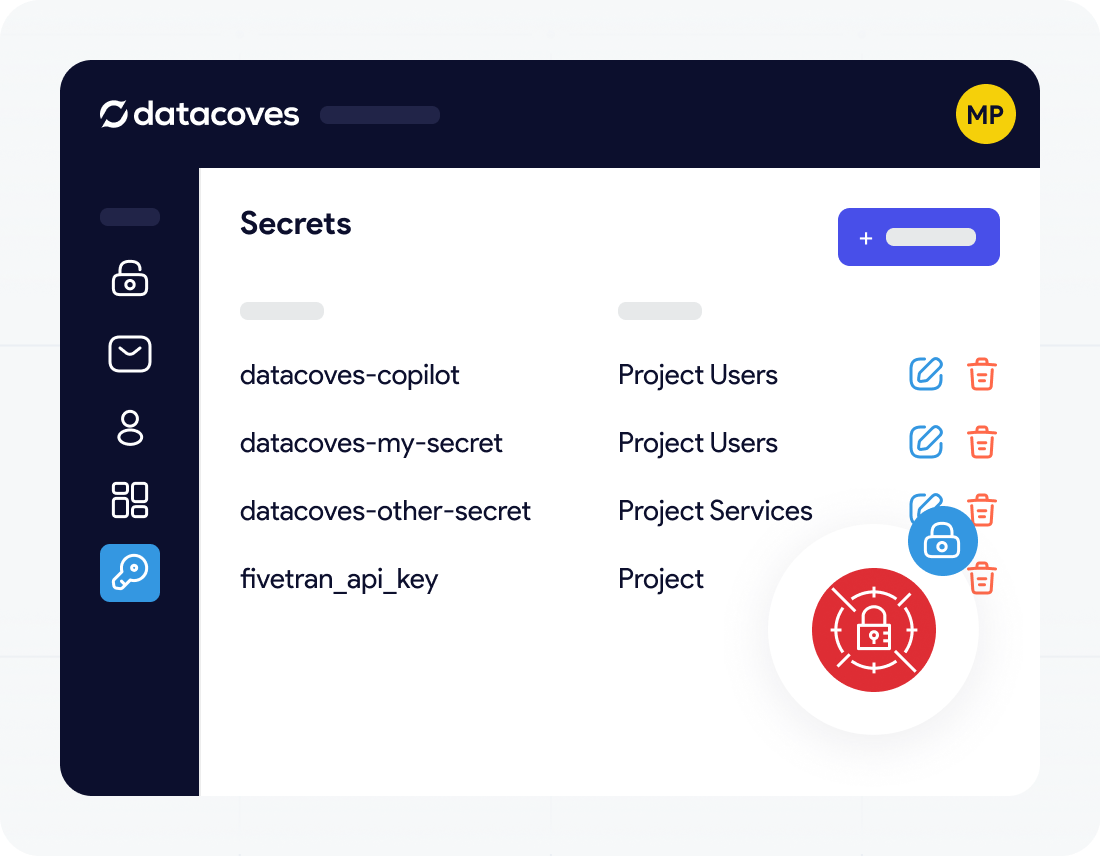
Use our built-in Secrets manager or integrate with AWS Secrets Manager to securely store sensitive information, ensuring your data pipelines operate safely and comply with stringent compliance requirements and best practices.
SSO & user management
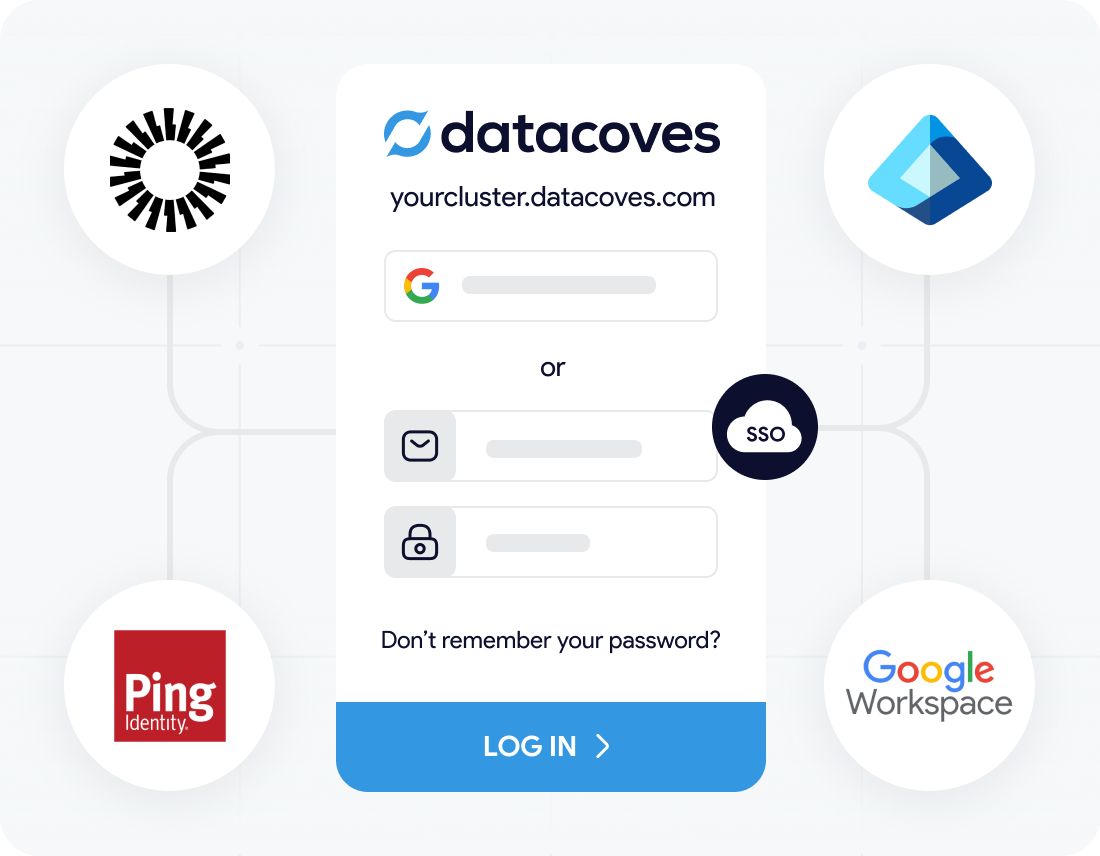
Simplify access with Single Sign-On and streamlined user management, enhancing security while reducing administrative overhead.
"My Airflow" per user
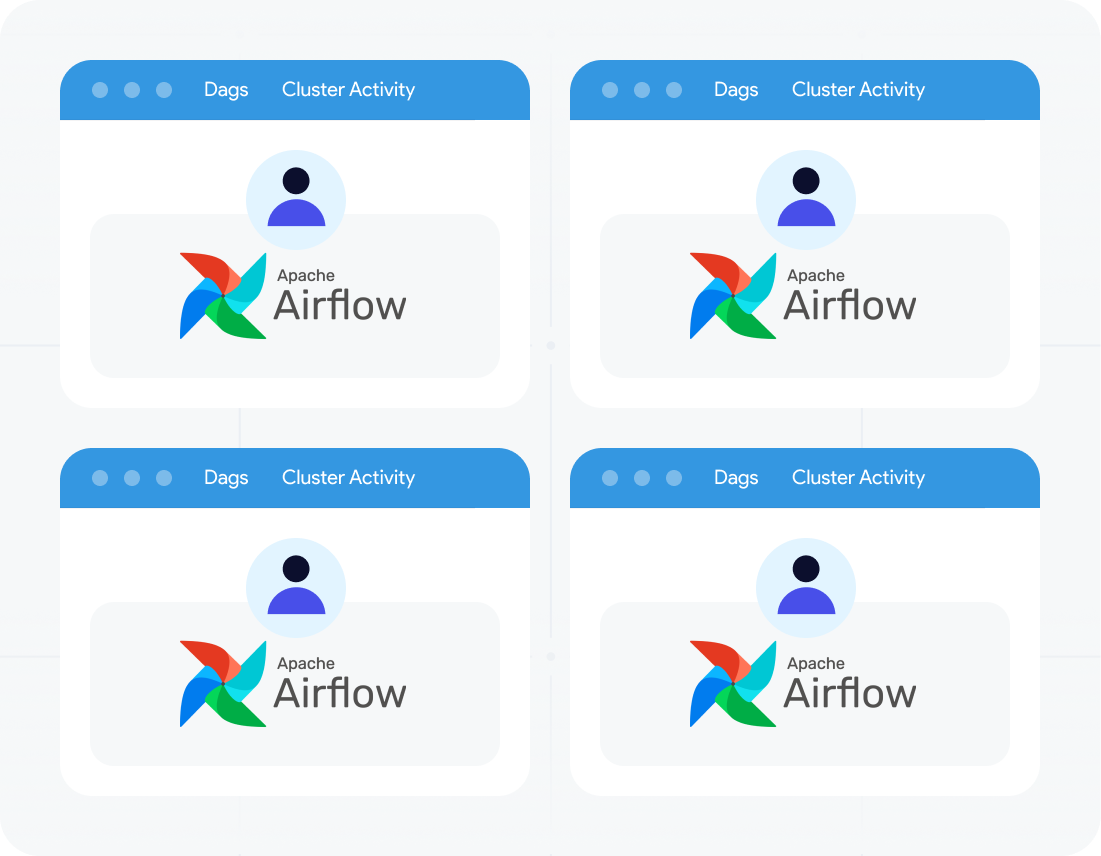
Provide dedicated Airflow environments for each user, streamlining development and testing.
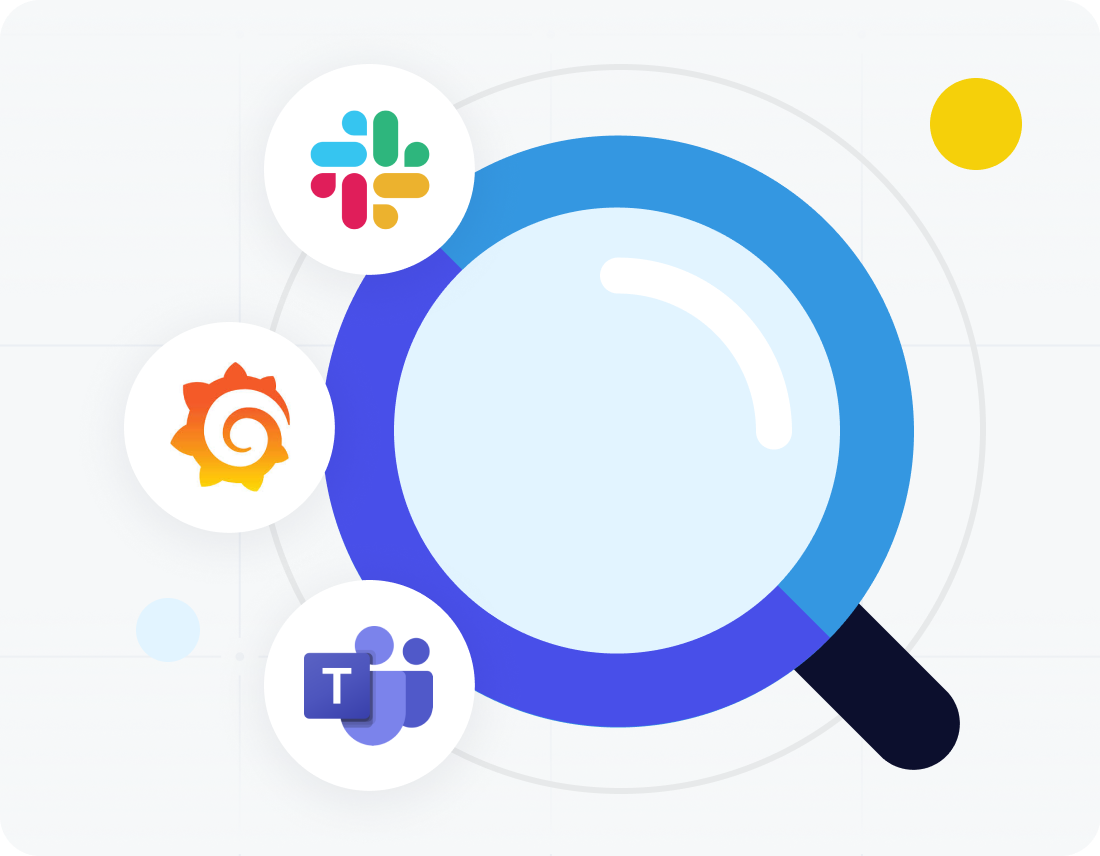
Observability
Proactive monitoring and swift response to pipeline events with out of the box email, Slack, and Teams integrations. Use our Grafana, or integrate with your observability tool.
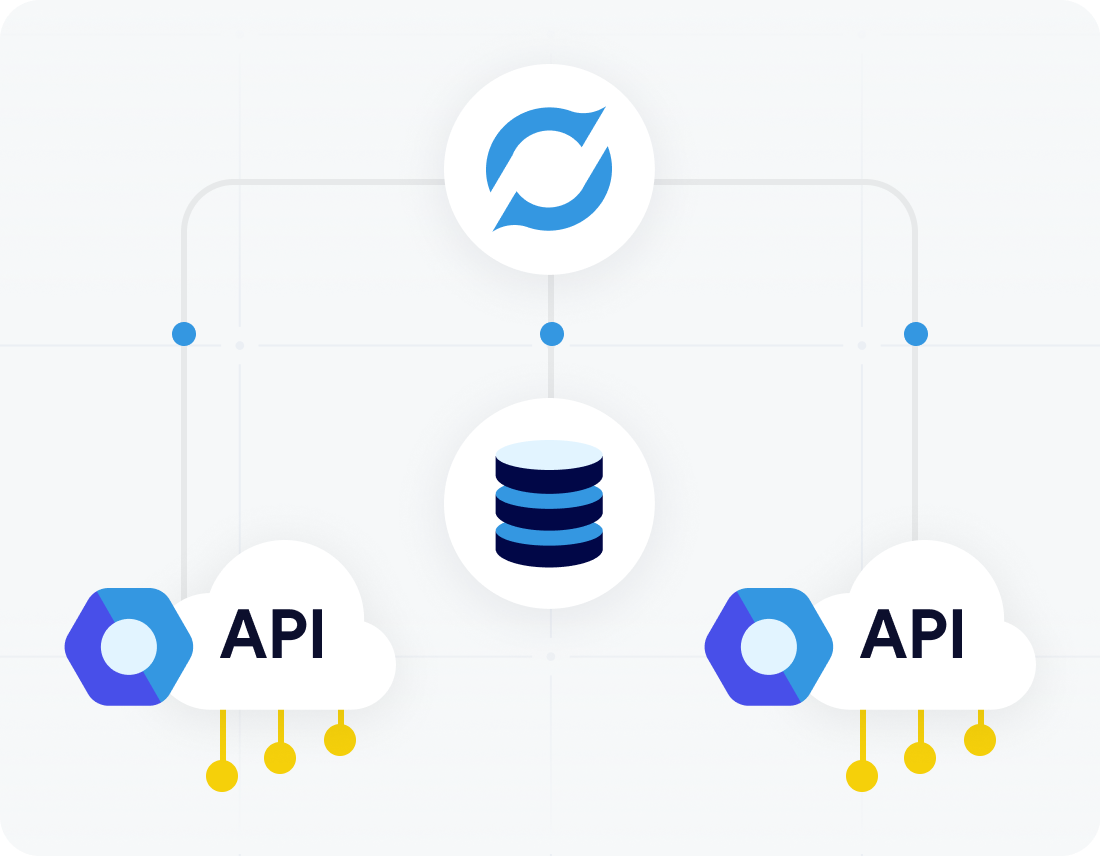
External API integration
Connect to external services and APIs, so a workflow can reach beyond the warehouse.
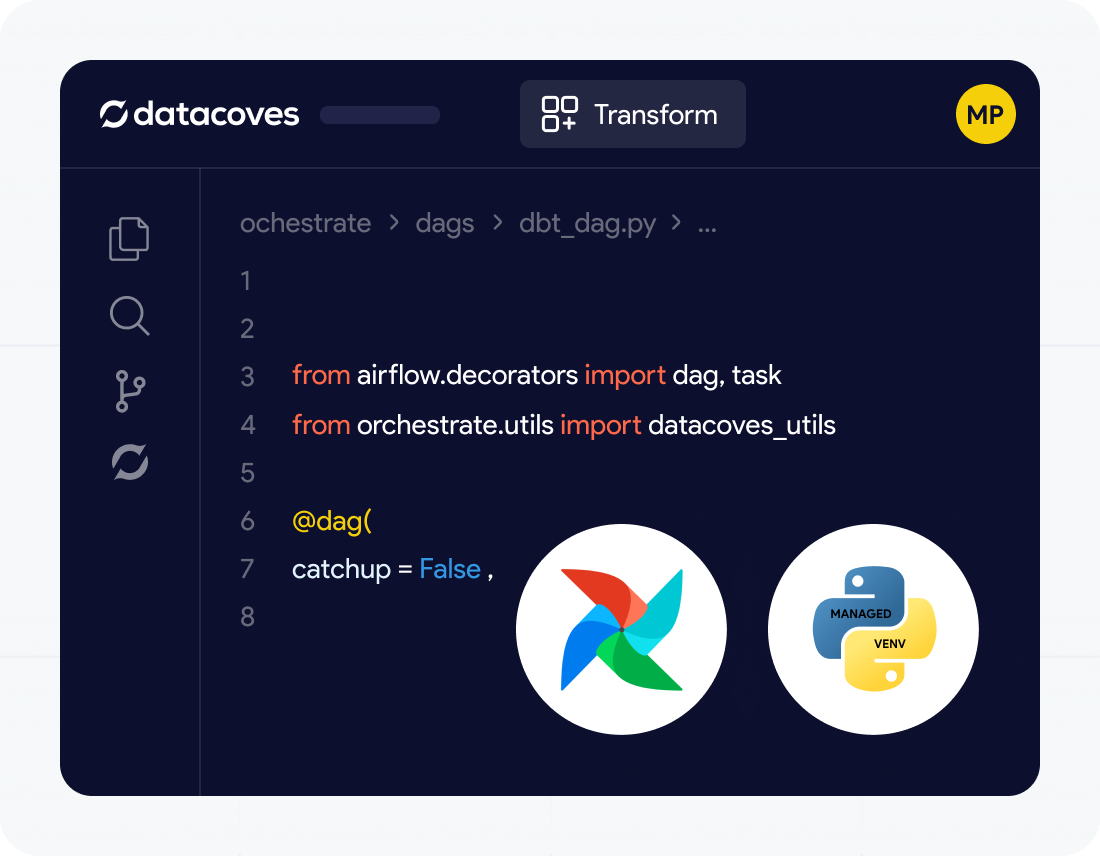
Virtual environments & decorators for dbt
Simplified dbt development with pre-configured virtual environments and custom Airflow decorators. Run dbt commands without managing dependencies or complex configurations. Focus on building and deploying your data models efficiently, not managing infrastructure.
See how Datacoves help transform data operations

J&J's data evolution: Innovating with Datacoves & dbt
“Datacoves really is a framework accelerator for us. They really are bringing automation tailored to our needs.”
Bart Vandendriessche, Manager Technology Services
Read StoryFrequently asked questions
Find answers to your questions below. Contact us if you couldn't find what you're looking for.
Contact UsDoes Datacoves support standard Airflow features?
Yes, Datacoves runs the same Airflow you can run yourself, managed so your team never has to handle the application layer.
Can we orchestrate tasks beyond dbt, for example triggering external APIs or ML pipelines?
Yes. Datacoves’ Airflow supports the full Airflow operator library, including HTTP and Python operators, as well as custom decorators. Your DAGs can trigger external APIs, run Python scripts, kick off ML workflows, and integrate with tools such as Spark, dbt, and Airbyte within a single directed acyclic graph.
Do developers need to install Airflow locally to test DAGs?
No, My Airflow provides a browser-based personal Airflow environment per developer with a single click.
How does Datacoves handle failed pipeline runs and recovery?
Airflow’s built-in retry logic handles transient failures automatically. Datacoves layers in proactive alerting via email, Slack, or Teams so your team is notified the moment something fails, not when a stakeholder reports a stale dashboard. For critical pipelines, SLAs can be configured to escalate if a run does not complete within a defined window.
How do you retry a failed dbt run from the model that failed?
Both dbt retry and the result:error+ selector read run_results.json from the previous run, so the artifact has to survive the failure for either to work. Datacoves’ dbt-api stores it: a task declared with dbt_api_enabled=True and download_run_results=True pulls the previous run_results.json when it starts, then runs dbt build -s result:error+ --state logs if it finds one and a full build if it doesn’t. The retry rebuilds only the models that failed and everything downstream of them, in one task, with no per-model DAG to maintain. dbt-api is on by default; see retrying dbt tasks in Airflow for a full DAG.
How is Datacoves' Airflow different from setting up Airflow ourselves?
Self-managed Airflow requires your team to provision infrastructure, manage Docker images, handle Kubernetes, configure secrets, and coordinate upgrades, all before you write a single DAG. Datacoves delivers a production-ready Airflow environment with managed upgrades, built-in secrets management, SSO, and per-user dev environments. The result: your data engineers spend their time building pipelines rather than operating Airflow.
What is "My Airflow" and why does it matter?
My Airflow gives each developer a personal, isolated Airflow instance accessible from the browser with a single click. Developers can test DAGs against real connections and variables without affecting the shared production environment. This removes one of the most common friction points in Airflow development: waiting for a DevOps team to provision a local or staging environment before you can test your logic.
What makes Datacoves different from Prefect or Dagster for dbt orchestration?
Prefect and Dagster, now one company after Prefect acquired Dagster Labs in July 2026, are general-purpose orchestrators that can run dbt, but they require additional configuration, custom adapters, and separate infrastructure decisions. Datacoves is specifically built around the dbt development workflow, it ships custom dbt Airflow decorators, virtual environments pre-configured for dbt, and a development environment (VS Code + My Airflow) that mirrors production. Teams get an end-to-end platform rather than assembling one from parts.
What notification options exist for alerting on failures?
Airflow sends failure alerts to email, Slack or Microsoft Teams out of the box. Grafana is also available for dashboards and threshold-based alerting. Because orchestration covers the whole pipeline, an alert can fire on an ingestion or downstream step as well as on a dbt run.
Why do enterprises trust Datacoves for managing data?
“Datacoves enabled us to reduce time to market by delivering a secure pre-configured environment for dozens of Analytics Engineers and to implement best-in-class DataOps processes on a dbt and Snowflake foundation”

“Without Datacoves I would have needed a whole team to get all of these services put together and integrated”

“Datacoves solves the infrastructure problem. Datacoves packages together all the tools needed to support data teams of all sizes.”

“The stability, Kubernetes-backed scalability, and overall reliability of the Airflow environment have been the cornerstone of achieving our data system goals.”

“We have a background in Data Architecture, but building a way of managing dbt and Airflow together would have been a project in itself.”

End-to-end data analytics with Managed dbt and Airflow
Don’t let platform limitations or maintenance overhead hold you back.