- Datacoves launched Atlas at dbt Summit 2026. Atlas captures business definitions as versioned Definitions of Record and serves them to AI tools over MCP.
- Asked “how many active vendors do we have?”, an AI agent without Atlas found three defensible answers: 25, 24, and 21. Grounded on Atlas, it returned 25, named the definition, and explained why the ERP status flag is wrong.
- dbt Labs and Fivetran made context the theme of the Summit, shipping dbt v2, dbt State, dbt Wizard, and dbt Charts, plus a private beta of Fivetran Context Layer.
- dbt v2 and the dbt VS Code extension can now run in Datacoves, and we’ve run both alongside dbt Charts and dbt Wizard connected to Atlas over MCP.
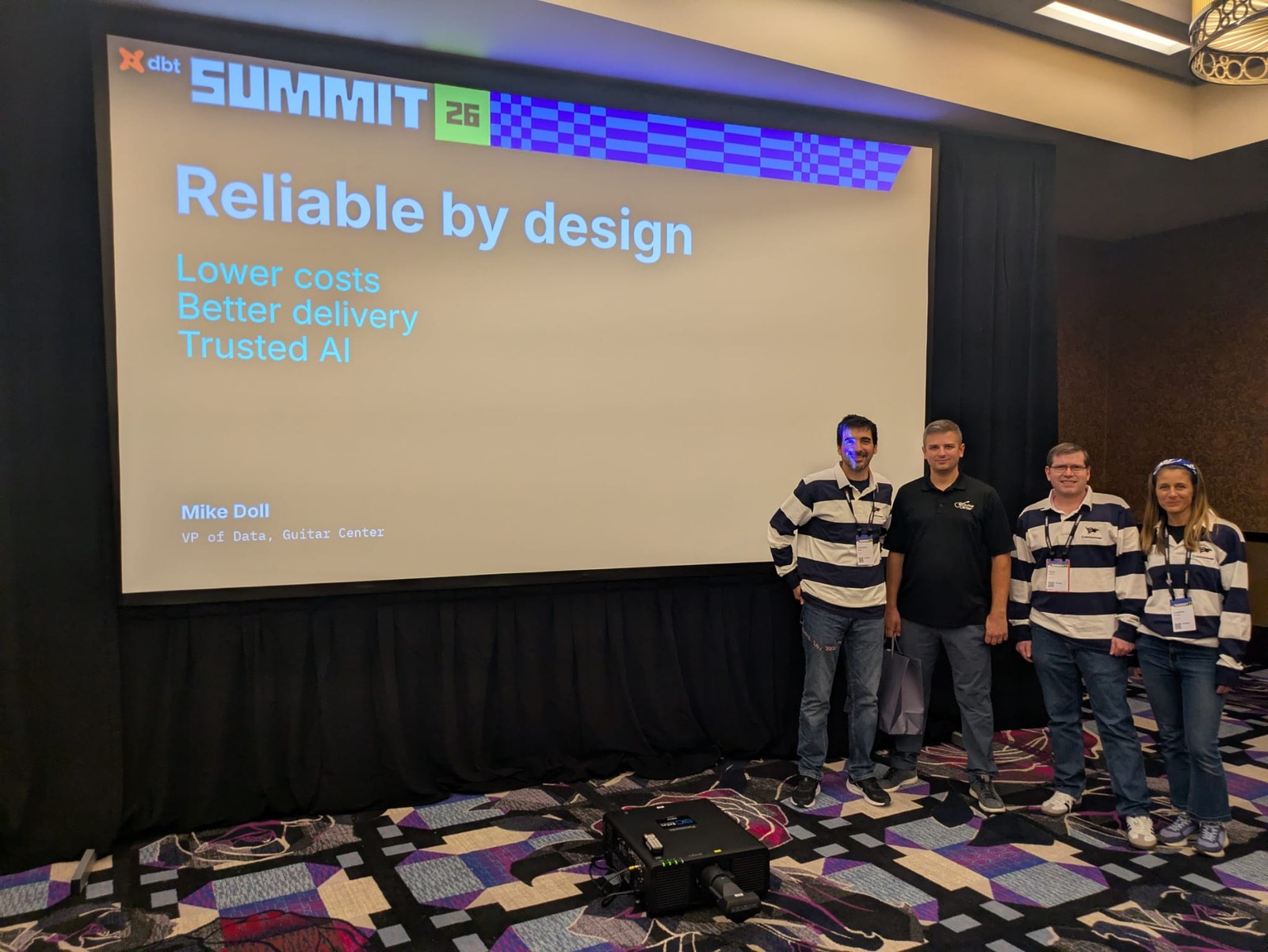
- Guitar Center’s VP of Data, Mike Doll, took the Summit stage with “Reliable by design.”
Datacoves launched Atlas at dbt Summit 2026 in Las Vegas. Atlas turns business definitions into governed, versioned Definitions of Record that any AI tool can use over MCP, so an agent answers with the definition your business approved. dbt v2 and the dbt VS Code extension are now an option in Datacoves, and we used dbt Labs’ new dbt Charts and dbt Wizard with Atlas to build the example in this post.
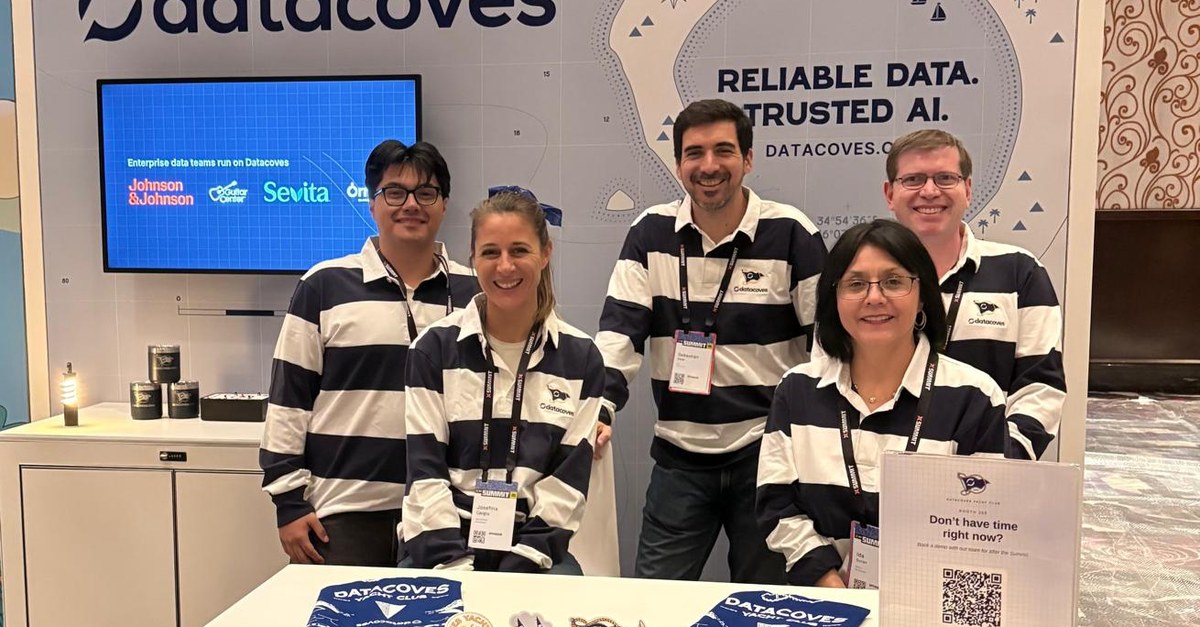
Datacoves at Booth 208
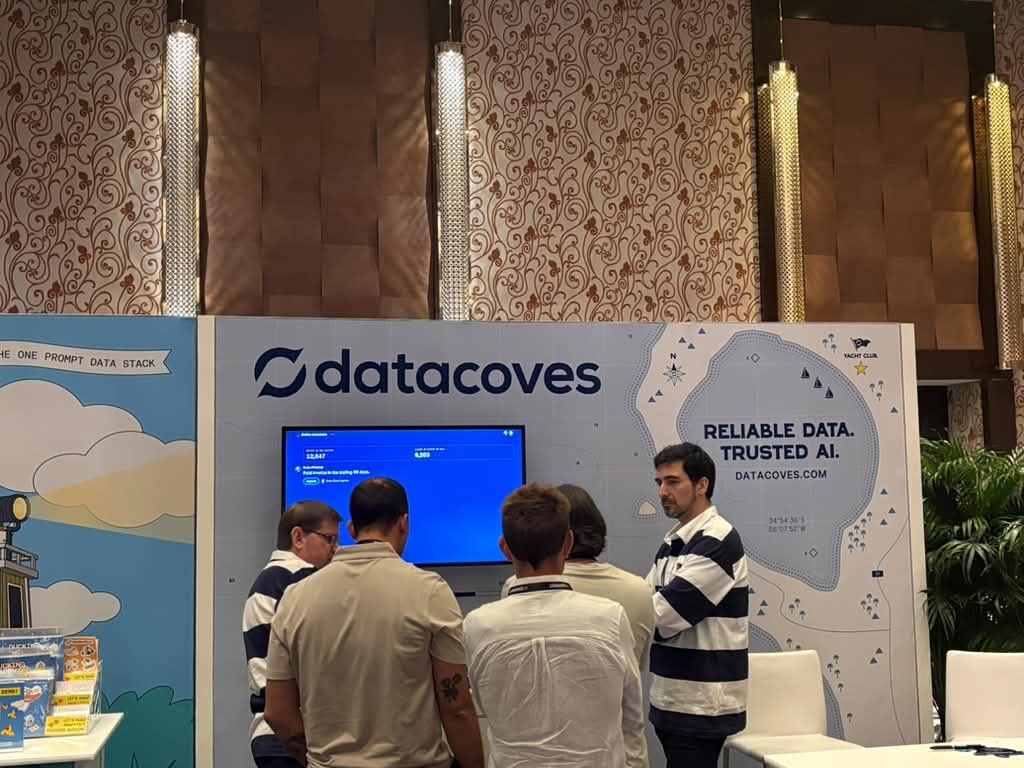
We spent the week at Booth 208 at The Cosmopolitan under the Datacoves Yacht Club flag, with one line on the wall: Reliable data. Trusted AI. That line is the whole case for Atlas. The booth stayed busy, and the conversation kept coming back to the same problem. Teams can already point an AI agent at their warehouse and get an answer in seconds. They can’t tell whether that answer matches what the business means.
That gap is what Atlas closes. Business owners define the terms that matter, such as active vendor, net revenue, or patient start. Those decisions become Definitions of Record (DoRs), versioned and reviewed like code. Any agent connected over MCP grounds on them before it answers.
Get our free ebook dbt Cloud vs dbt Core
Comparing dbt Core and dbt Cloud? Download our eBook for insights on feature, pricing and total cost. Find the best fit for your business!
Get the PDF
Guitar Center on the dbt Summit Stage
Mike Doll, VP of Data at Guitar Center, presented “Reliable by design.” His talk centered on lower costs, better delivery, and trusted AI. We like the order. Trusted AI sits at the end because it depends on everything before it: a platform built for reliability and a team that delivers with it.
Guitar Center runs its analytics stack on Datacoves. You can read how they got there in the Guitar Center case study.
Context Was the Theme of dbt Summit 2026
dbt Labs and Fivetran spent the Summit making one argument: the foundation that makes analytics trustworthy is the same one that makes AI trustworthy. Their product recap covers every release in detail. Here’s the short version.
Mark Rittman summed up the week well in his Summit recap: “getting the context layer right is mostly hygiene rather than a technology purchase.” We agree. Agents can’t use context nobody wrote down, and they can’t tell which of three plausible definitions the business signed off on.
For the full story on the engine change, see dbt Fusion and dbt 2.0 Explained. For what the merger means for dbt Core, see dbt Core’s Future in the dbt Fivetran Era.
Why AI Agents Give Plausible but Wrong Answers
We asked an AI agent working in Datacoves a simple question: how many active vendors do we have? The data lives in Snowflake, modeled with dbt, with tests in place. Nothing about the data is broken.
Without Atlas: three defensible answers
The agent did good work. It read the model SQL and found three ways to count active vendors.
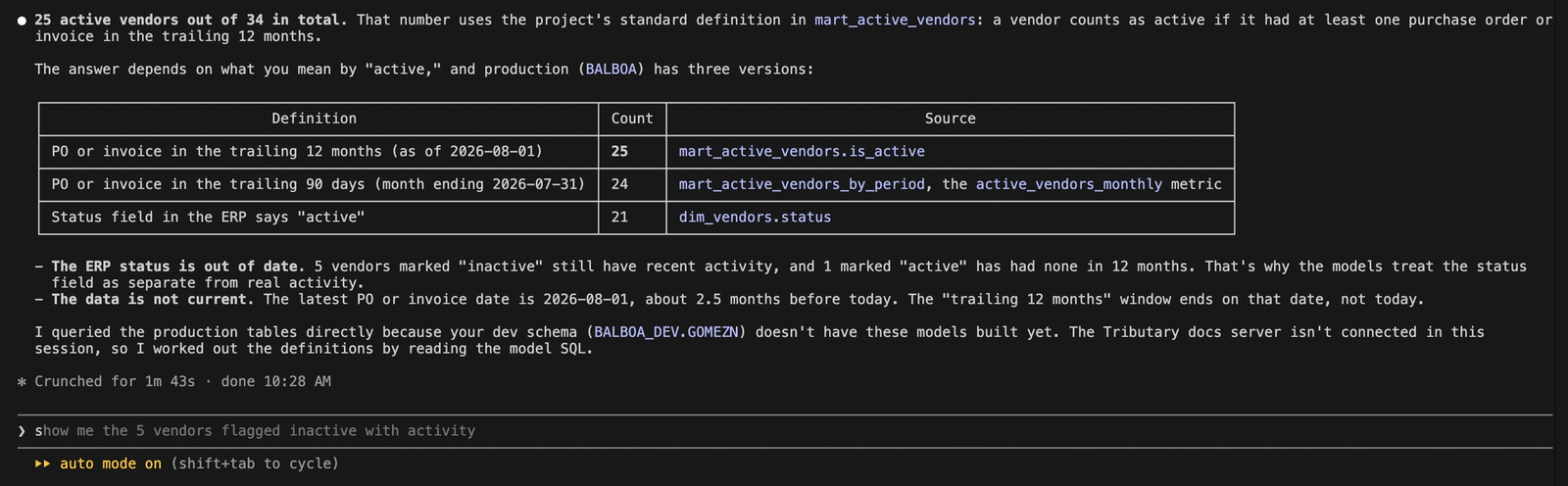
Each number is defensible, and none is marked as the one the business uses. Someone now has to pick. That choice usually happens in a thread nobody can find months later, and the next person who asks may pick differently.
Asking an agent to guess what “active” means is like asking a new hire on their first day. They’ll find a number in the data. Whether it’s the number finance reports depends on luck.
With Atlas: one governed answer
Same question, same data. This time the agent grounds on Atlas first.

The agent returns 25 active vendors out of 34. It names the governed Active Vendor definition: at least one purchase order or invoice in the trailing 12 months. It points to the exact source column. It tells you not to use the ERP status flag, because that flag is wrong in six cases: five vendors marked inactive are still transacting, and one marked active hasn’t had a PO or invoice in a year.
It also notes that the project’s active_vendor_reference_counts test expects 25. The definition, the model, and the test all agree, and the agent can show you that. Confidence in an AI answer comes from being able to trace it, and Atlas makes every answer traceable.
The Same Definition in a dbt Charts Dashboard
Definitions only pay off if every tool uses them. We built a vendor activity dashboard with dbt Charts on models created from the Atlas definitions, with dbt Wizard connected to Atlas over MCP during development. The dashboard shows the same 25 active vendors and the same six ERP disagreements the agent found.
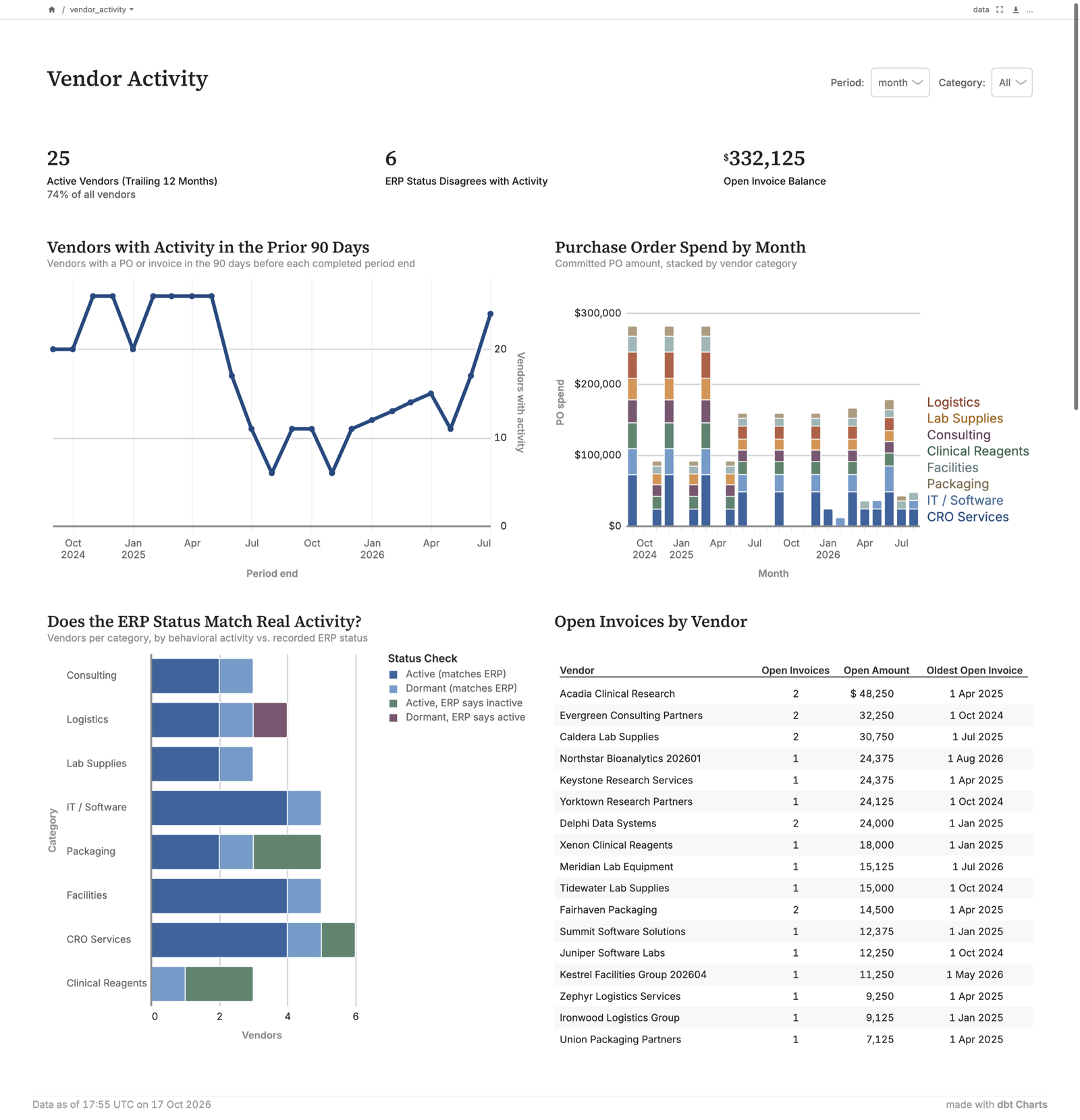
Look at the trend chart in the upper left. It counts vendors with activity in the prior 90 days, which is useful for spotting trends and is not the governed definition. So it doesn’t use the word “active.” The governed term appears in one place, on the number the business agreed to. That’s a small labeling choice, and it’s the kind that keeps two executives from quoting two different vendor counts in the same meeting.
The “Does the ERP Status Match Real Activity?” chart turns the agent’s warning into something procurement can act on. Clinical Reagents and Packaging carry most of the vendors flagged inactive that are still buying, and one Logistics vendor is flagged active with no activity at all.
How Atlas Compares to Fivetran Context Layer
Both products aim to give AI agents better context. They get there differently. Fivetran Context Layer discovers meaning across your sources, including documents, tickets, and other unstructured text, and resolves terms to a shared ontology. Atlas records meaning the business has explicitly decided and approved, and versions every change.
Our take: choose discovery when you need to find what your organization’s documents say a term means. Choose Atlas when the answer must match what the business approved. The two can work together, with discovery surfacing candidate definitions and Atlas recording the decision.
When the Business Rule Changes
Definitions don’t stay put. Procurement may decide 12 months is too short for vendors on annual contracts and move the window to 18. In most stacks, that change lives in someone’s head until a dashboard and an agent quietly disagree.
In Atlas, the change goes in as a new version of the Definition of Record. It’s reviewed and approved like a pull request, and every tool reading it over MCP picks it up, whether that’s Claude, dbt Wizard, or the models behind a dbt Charts dashboard. The previous version stays in the history. When last quarter’s number doesn’t match this quarter’s, you can see that the definition changed, who approved it, and when.
Keeping definitions current becomes part of the normal workflow. Nobody must remember a separate documentation step.
dbt v2 and the dbt VS Code Extension in Datacoves
dbt v2 and the dbt VS Code extension can now run in Datacoves’ in-browser VS Code environment. We’ve run both inside the same managed dbt and Airflow platform, in your own cloud or as SaaS, and used them to build the vendor example in this post.
Check adapter support first. dbt Labs lists BigQuery, Databricks, DuckDB, Redshift, and Snowflake as GA for dbt v2. ClickHouse and Spark are in beta, and Athena, Fabric, and Postgres are coming soon. Teams on those warehouses can stay on dbt v1 in Datacoves until their adapter is ready. Our dbt Fusion and dbt 2.0 guide covers how to decide, and dbt Pricing breaks down what the two v2 distributions cost once you get past the free engine.
What This Means for Your Data Team
If you’re piloting AI agents on your warehouse: start with the ten terms your executives ask about most. Get the owners to agree on each one and record it as a Definition of Record. Agents grounded on those ten will give better answers than agents with access to a thousand undocumented tables.
If you’re on dbt v1 and watching dbt v2: move when your adapter is GA and your packages are compatible. The speed is real, and the real-time feedback helps coding agents as much as it helps people.
If you work in a regulated industry: you can adopt dbt v2, dbt Charts, AI agents, and Atlas without moving your data out of your cloud. That was the hardest objection to AI pilots in pharma and financial services, and it no longer blocks you.
Want to see the vendor example run against your own definitions? Book an architecture review and we’ll walk through it with your data. For a deeper look at the thinking behind Atlas, read Introducing Atlas: an agreement layer for enterprise AI or listen to Atlas and the Agreement Layer.