

Overview
What you will learn
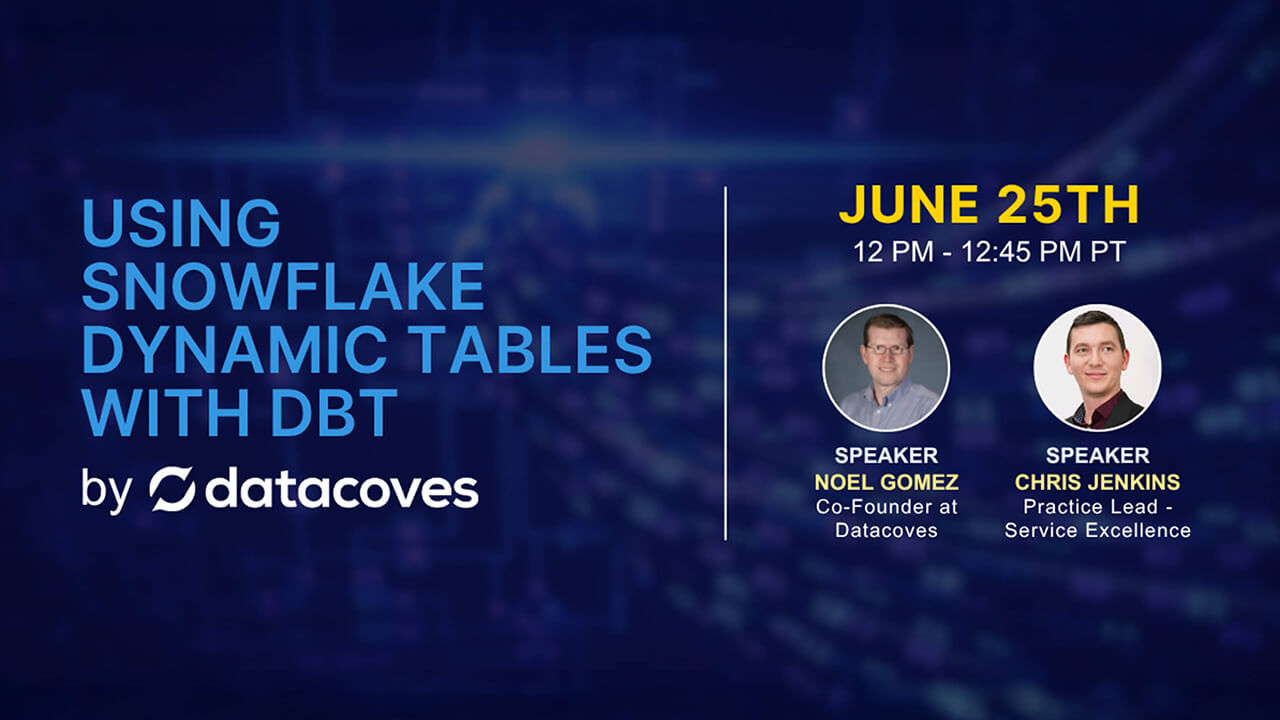
In Datacoves’ first live workshop, we explored how Snowflake Dynamic Tables can be used within a dbt-powered analytics workflow to simplify data transformations and improve data freshness.
During this 45-minute session, we covered practical patterns for incorporating Dynamic Tables into existing dbt + Snowflake environments, with a focus on reducing operational overhead while maintaining performance and reliability.
Key Takeaways
- The differences between Snowflake Standard Tables and Dynamic Tables, and when to use each
- How Dynamic Tables fit into dbt projects and typical transformation workflows
- A high-level overview of dbt, Snowflake, and Streamlit working together
- Real-world examples showing how Dynamic Tables can simplify transformation logic
- Techniques for optimizing data freshness and performance using Dynamic Tables
Who This Was Most Relevant For
- Data and analytics engineers working in dbt + Snowflake environments
- BI developers and data architects designing modern analytics platforms
- Teams evaluating Dynamic Tables as part of a modern data stack
The session highlighted how Dynamic Tables can help teams streamline transformations, reduce maintenance effort, and deliver fresher data with less complexity.
-Photoroom.jpg)